Guo Guangchang: What Powers Fosun’s Global Growth?
“Go global or be left behind.” In recent years, a growing number of Chinese enterprises have come to view global operations as essential to their future growth—a critical pathway to move beyond domestic market saturation and unlock broader global opportunities.
An early mover in globalization, Fosun now operates across more than 40 countries and regions, establishing itself as one of China’s most successful privately owned enterprises on the global stage. Its diverse portfolio features internationally recognized brands such as Fidelidade and Club Med. According to its financial results, Fosun International generated RMB49.16 billion in overseas revenue in the first half of 2026, accounting for 56.5% of total revenue.
As Chinese enterprises expand overseas, many struggle with product localization, unfamiliar regulations, and cultural and language barriers. Having navigated these similar challenges, Guo Guangchang, Chairman of Fosun International, notes that the hardest part of globalization is never deploying capital or exporting products. It is building the organizational capabilities to manage across cultures.
In his view, an “entrepreneurial spirit” serves as both the core strength and guiding principle behind Fosun’s global operations.
The Underlying Logic Behind Fosun’s Global Expansion
Fosun began its globalization journey around 2007, initially guided by the strategy of “combining China’s growth momentum with global resources”. The approach focused on leveraging China’s growing market to unlock opportunities for overseas brands and assets, a vision reflected in the Group’s landmark investments in Club Med and Fidelidade.
More than a decade into its globalization journey, Fosun’s approach has evolved.
Fosun Pharma’s innovative drug HANSIZHUANG has not only launched in Europe but has also been included in the public reimbursement systems of seven countries, including Germany, Italy and Spain. Fidelidade has expanded beyond its Portuguese home market across Europe, Latin America and Africa, while Club Med has opened a flagship resort in South Africa, marking one of the country’s most significant tourism developments in nearly 50 years. Meanwhile, the Yuyuan Lantern Festival, a national-level intangible cultural heritage project under Fosun, has been staged in Paris, Bangkok and other international cities.
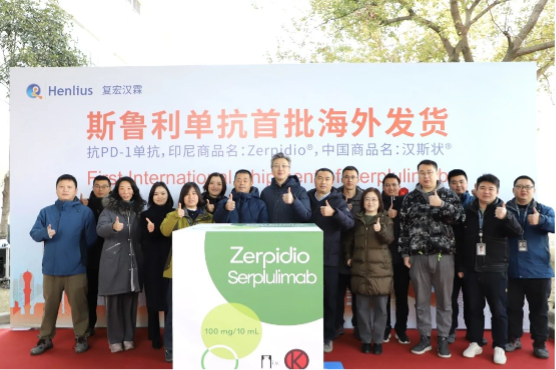
HANSIZHUANG’s first overseas shipment
Guo Guangchang describes this new phase as a strategic shift from harnessing “China’s growth momentum” to leveraging “China’s capabilities”.
Though subtle in wording, the distinction underscores a fundamental evolution in strategy. Previously, Fosun “leveraged the Chinese market to access global resources”.Today, it “draws on China’s industrial capabilities to create value in markets around the world”. From Fosun Pharma’s research and development (R&D) expertise to the operational know-how of Fosun’s tourism segment and Fidelidade’s insurtech capabilities, Fosun now combines capabilities developed in China with local expertise in markets around the world.
Fosun’s industrial capabilities are built largely on its more than 150 global partners, nearly 40 of whom are international executives based overseas. In assessing partners, Guo Guangchang looks beyond financial metrics and professional credentials. One of his key criteria is that they “embrace the company’s culture and values” and bring an “entrepreneurial mindset” to their leadership.
In Guo Guangchang’s view, an entrepreneurial spirit underpins the global expansion of Chinese enterprises precisely because it transcends cultural boundaries.
The deeper significance of Fosun’s globalization lies not in the number of overseas assets it has acquired, but in the shared framework of communication and evaluation it has established among leaders across diverse cultural and linguistic backgrounds, anchored by entrepreneurial spirit as a shared benchmark. While this spirit has defined Fosun’s 30-plus-year journey, what exactly does it entail?
Taking Responsibility for Results
First, it is a mindset defined by taking initiative and having the courage to assume full accountability for results.
At an internal annual conference, Guo Guangchang explained: “Having an entrepreneurial spirit is about maintaining operational agility, stepping out of your comfort zone, and pursuing continuous learning and improvement.” In other words, leaders across Fosun and its ecosystem companies are expected to take the initiatives, act boldly and assume full accountability.
Second, an entrepreneurial spirit is about making steady progress.“Improve by 0.01 seconds every day,” Guo Guangchang once urged Fosuners.
Whilemodest on the surface, the compounding impact of those incremental gainsover Fosun’s 34-year historyhas been extraordinary.Guo Guangchang has another way of expressing this philosophy: doing the right things, the difficult things and the things that take time to develop.
Fosun Pharma’s track record speaks for itself. In 2006, Fosun began moving beyond generic medicines into innovative drug development. It took its biologics subsidiary Henlius 13 years to reach profitability, prompting Guo Guangchang to reflect that “good things take time and perseverance”.
Third, an entrepreneurial spirit is about taking control of strategic choices,including deciding what not to do.That isGuo Guangchang’s approach: understanding business cycles and knowing when and how to respond.
Following the 2008 financial crisis, Fosun invested in Club Med and the Portuguese insurance sector, classic examples of counter-cyclical investing. As Guo Guangchang put it: “Repair the roof on a sunny day, because when a crisis hits, new opportunities can also emerge.”
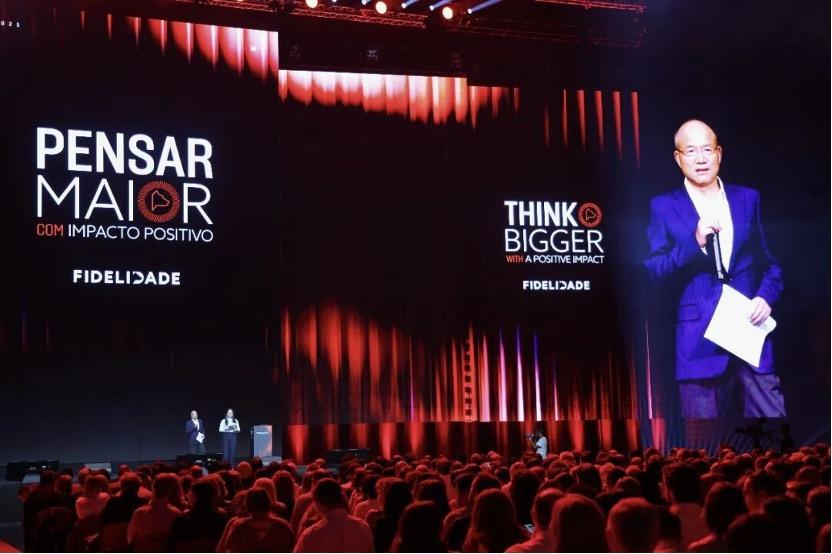
Guo Guangchang delivers a speech at Fidelidade’s Pensar Maior (Think Bigger) conference
Patience and decisive action are not contradictory. Patience demands internal discipline, whereas decisive action requires sound judgment regarding external opportunities. For Guo Guangchang, a true entrepreneurial spirit encompasses both knowing when to wait patiently and when to seize the moment.
The same disciplined thinking underlies Fosun’s efforts in recent years to streamline itsoperationsby divesting non-core assets, reducing debt and focusing on its core businessesserving the needs of families.
Guo Guangchang’s point is that merely weathering a downturn is a reactive response, whereas establishing a long-term strategic direction is a proactive choice. True to this philosophy, Fosun has methodically exited businesses characterized by “scale without profit and revenue without cash flow”. Those that remain must satisfy two criteria: they must align with Fosun’s core competencies and offer substantial runway for future growth.
This reflects an often-overlooked side of entrepreneurship: the courage to acknowledge missteps, scale back, and change course.
Learn to Reset and Start Afresh
Fosun’s approach to talent is built around embedding an entrepreneurial spirit throughout the organization.
Early on, Guo Guangchang established a multi-tiered partnership system within Fosun. Today, the Group has more than 150 global partners.Selections are made regardless of seniority or geography; what matters above all is whether they possess a true“entrepreneurial mindset”.
Partner status is not permanent. Partners must continue to contribute and grow to retain their status.
Guo Guangchang emphasizes that partners must align with Fosun’s core values and vision while acting with an entrepreneurial ownership mindset, taking full accountability for their domains and driving key business breakthroughs.
Despite its high expectations, Fosun is equally committed to rewarding individuals who contribute to the organization. “We must uphold a culture that recognizes performance and rewards it accordingly,”Guo Guangchang said at an internal conference.
However, sustaining an “entrepreneurial mindset” is no easy task. Guo Guangchang believes that industry and capital cycles are often beyond our control, but we can shape our own trajectory by continuously learning, resetting, and starting afresh.
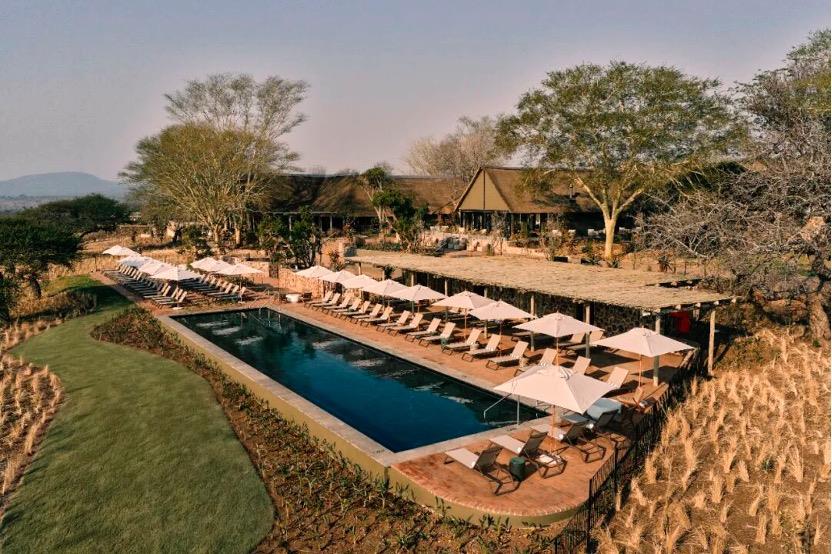
Club Med South Africa Beach & Safari
Resetting has two sides: refusing to rest on past achievements, and being willing to rethink what experience has taught you. That is why Fosun insists on continuous innovation. “In a constantly changing world, extensive experience can sometimes get in the way,” Guo Guangchang once told a class at Hupan University, explaining why he is sometimes willing to hire people who may have less experience but demonstrate strong adaptability. This culture of continuous learning has enabled Fosun to expand into new markets and industries while sustaining performance.
Guo Guangchang’s Distinctive Strength
For more than three decades, Fosun has upheld a set of values: “Self-improvement, Teamwork, Performance, and Contribution to Society”.
These values are rooted in Confucian thought, but Guo Guangchang brings a business perspective to them. “The real motivation for entrepreneurship must come from a deep conviction that what you are doing creates value for customers and society.”
Fosun Pharma exemplifies this approach. Traditional chemotherapy for gastric cancer often brings severe side effects, causing many patients to abandon treatment. “After 15 years of R&D, we brought HANSIZHUANG to market, potentially ushering in a chemotherapy-free era in gastric cancer treatment. It not only allows patients to live longer, but also to live with dignity, and in some cases, even to offer hope for a cure,” Guo Guangchang mentioned in his 2026 letter to shareholders.
Fosun’s cultural tourism business is never simply about developing a standalone project. Instead, it bridges global brands and resources with local priorities, from urban renewal and consumption upgrading to job creation.
Take the Atlantis Sanya tourism complex and the ULTRAMED project under construction as examples. Since opening, Atlantis Sanya has helped propel Sanya’s tourism industry into the 3.0 era. Guo Guangchang sees the ULTRAMED project as an approach to “help establish Sanya as a world-class resort destination and advance its development as an international tourism and consumption center”. Both projects can also support Hainan’s development as a free trade port.
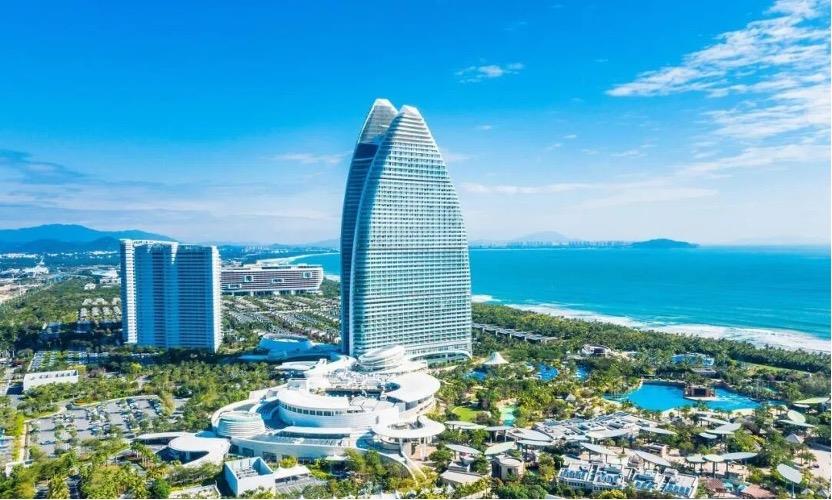
Atlantis Sanya tourism complex
Over 34 years, Fosun has developed from a single-story building near Fudan University to over40 countries and regions, evolving its strategy from“combining China’s growth momentum with global resources” to “combining global resources with China’s capabilities”.Across changing economic cycles, Guo Guangchang’s core expectation remains constant—an unwavering entrepreneurial mindset that enables Fosun to thrive through any market headwind. As Guo Guangchang puts it, “What you believe in most deeply often holds the greatest power”—reflecting his conviction that Fosun’s true strength lies not in its scale, but in people capable of creating lasting value across businesses and markets.
Note: This article was originally published in Chinese by Qiu Chuji (邱处机), a business-focused WeChat publication dedicated to profiling prominent entrepreneurs and business leaders. This English version has been translated and adapted for an international readership.